

Pole Barn Storage for Your RV and Livestock: The Complete Property Owner's Guide
February 17, 2026
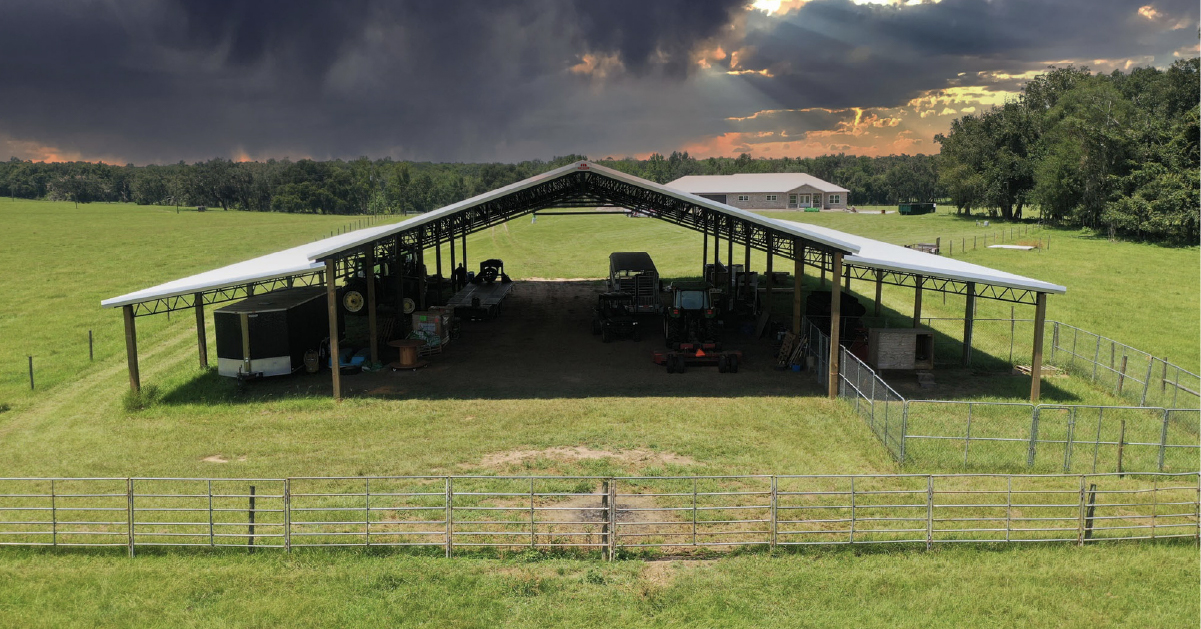
Finding space for both your RV and livestock usually means building two separate structures and doubling your costs. A well-designed pole barn eliminates that problem by giving you versatile covered space that shifts with the seasons.
Here's what makes this approach so practical: Your motorhome sits in the bay from October through April while hay and equipment fill the other end. When camping season arrives, you pull the RV out and move cattle or horses into those same protected bays during summer storms. Instead of paying for two buildings, you've got one adaptable structure doing double duty.
Your grandfather's old agricultural shed has nothing in common with today's pole barns. Modern designs incorporate thoughtful drainage, strategic ventilation, and layouts that protect an expensive motorhome just as well as they shelter livestock. Getting this design right from the start makes the difference between a barn that works beautifully and one that frustrates you constantly.
Why Pole Barns Work So Well for RVs and Livestock
Conventional buildings need expensive foundations and months of construction time. Most property owners can't justify those costs for what amounts to storage space. Pole barns skip the foundation entirely. treated posts go straight into the ground, cutting costs while actually improving wind resistance.
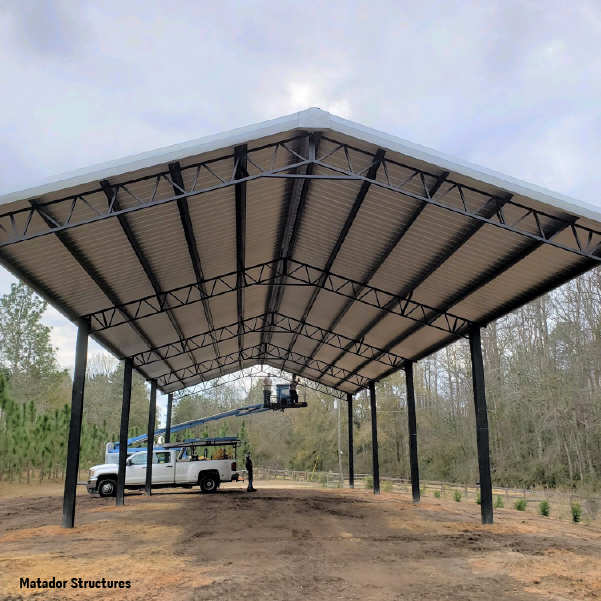
The real advantage shows up in the interior. Without support columns interrupting every twelve feet, you can maneuver a 35-foot motorhome and still have room for livestock pens, hay, and equipment. Try that in a stick-built barn where posts block half your floor plan.
Metal roofing handles weather extremes that wreck other materials. Your RV roof stays intact instead of cracking in the sun. Paint doesn't fade. Livestock get the same protection, dry bedding when storms roll through, and shade when summer heat becomes unbearable.
Most pole barns go up in weeks, compared to half a year for comparable traditional construction. You're storing your RV this fall instead of paying monthly storage fees while waiting for contractors to finish next spring.
Laying Out Space That Actually Functions
Poor planning creates barns where nothing quite works right. Your RV needs a straight shot from the door to its parking spot, not an obstacle course around feed bins. Livestock need their own area away from vehicle traffic.
Dividing Interior Zones Intelligently
Think in terms of functional layouts and dedicated zones instead of mixing everything randomly. Put RV storage at one end with tall doors and smooth concrete. Livestock go at the opposite end with proper drainage and pasture access. The middle section handles hay and equipment, giving you flexibility as needs change.
A 40x60 barn naturally breaks into three sections of roughly 800 square feet each. Maybe you need more RV space for multiple vehicles. Maybe livestock requires extra room. Adjust the proportions to match what you're storing.
Door locations control how traffic flows through your barn. The main RV entrance should be on the end wall, where your driveway provides the straightest approach. Livestock doors work better on side walls connecting to pastures. This arrangement keeps you from having to drive past animal pens every time you move the motorhome.
Choosing Floors That Match Each Zone
Concrete works great under RVs, but creates real problems for livestock that need softer, more forgiving surfaces. Pour it strategically instead of trying to make one floor type work everywhere.
The RV bay and main traffic lanes, where you need firm, level surfaces for handling heavy loads and constant movement, should be paved with concrete. Dirt or gravel would turn into muddy ruts within weeks. Quality concrete with proper base prep could run approximately $4-$7 per square foot.
Livestock do better on compacted gravel or well-draining dirt that provides comfortable footing. You're adding bedding on top anyway, so expensive concrete underneath serves no purpose. Gravel costs roughly $1-$2 per square foot and actually drains better than concrete.
Pay attention to where these different floor types meet. A slight grade change or transition strip stops water from livestock areas from flowing into RV storage, where it pools around tires or freezes into ice patches.
Protecting Your RV Investment Properly
Parking your motorhome under a roof helps, but real protection requires addressing specific vulnerabilities these vehicles face when sitting idle for months.
Getting Dimensions Right
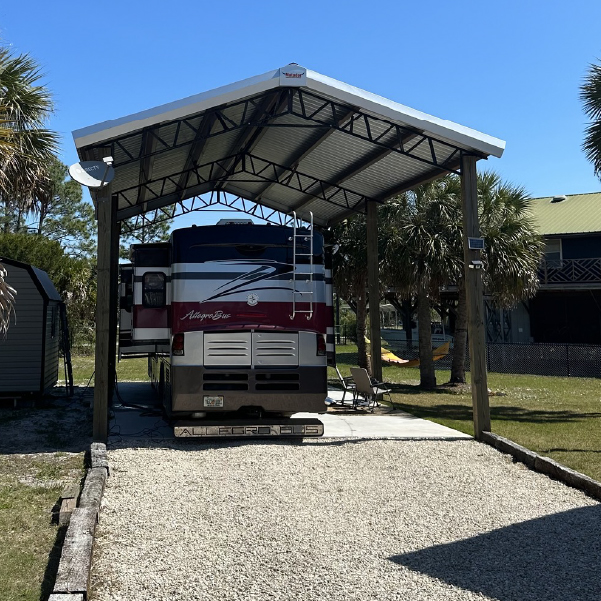
Measure your RV completely before finalizing the building’s size. You need the overall length, including rear-mounted bike racks or spare tires, plus height with air conditioners and antennas stored. Add two feet to each dimension as your working minimum; that breathing room matters when parking in tight quarters.
Your RV needs more than just a parking space. Walking around the vehicle for inspections, opening storage bays, and occasionally extending slide-outs all require extra room beyond the vehicle's footprint. Budget an additional 3-4 feet around the perimeter.
Housing Livestock in Shared Space
Animals bring requirements that RV storage doesn't: waste removal, feeding access, comfort considerations, while maintaining cleanliness standards that keep your motorhome protected.
Picking Suitable Livestock
Different animals adapt differently to barn environments. Cattle, horses, sheep, and goats all work successfully in pole barns, but each brings distinct space needs and management considerations.
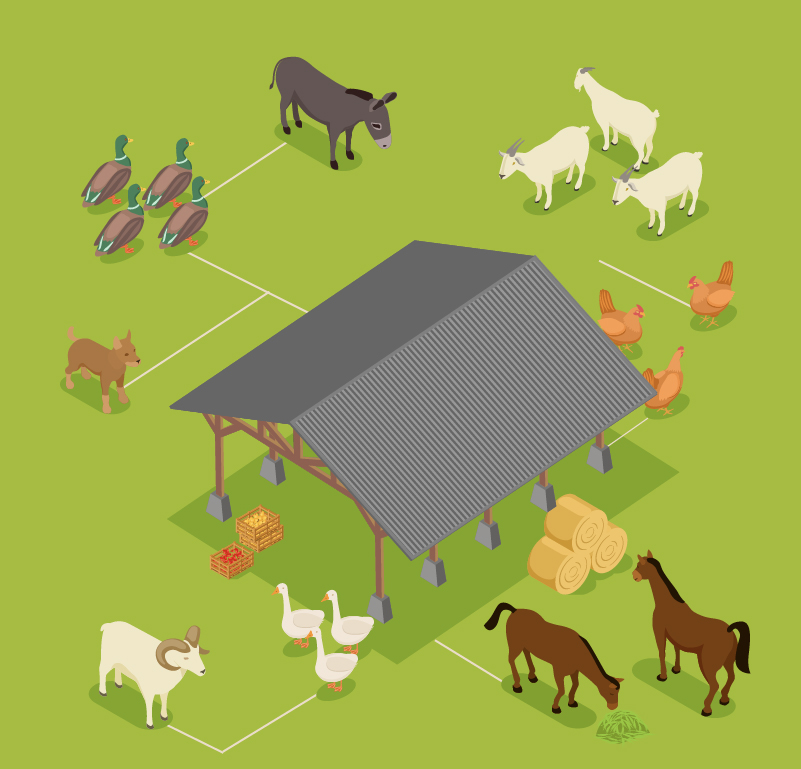 Horses want roughly 12x12-foot stalls with solid partitions. A 40x60 barn fits 4-6 horse stalls comfortably while leaving room for tack and hay. These animals generate substantial waste needing daily attention, so plan your layout with cleanup access in mind.
Cattle need less individualized space but produce more waste volume per head. Covered cattle bays work well for calving, isolating sick animals, or providing weather protection during extremes. You can figure 50-75 square feet per animal for temporary housing.
Sheep and goats adapt well to communal pens, using space efficiently. Plan 15-25 square feet per animal, depending on breed size. These species particularly benefit from a pole barn shelter during lambing or kidding when newborns need protection from temperature swings.
Managing Waste Effectively
Waste management determines whether your dual-purpose barn succeeds or becomes a nightmare. Poor drainage and lazy cleaning create odor issues, attract rodents, and eventually contaminate your RV storage, regardless of the quality of separation.
Floor slope matters enormously. Grade livestock areas at a minimum of 2% toward drainage points that channel waste away from the building. This modest slope barely affects footing but stops urine and wash water from pooling in bedding.
Dedicated collection points make daily cleaning tolerable. A gravel-filled drainage channel along the back wall collects fluids and directs them outside the barn. This could run $5-$8 per linear foot, but saves hours weekly compared to manually hauling saturated bedding.
Clean regularly instead of letting waste accumulate. Daily stall cleaning during heavy-use periods, weekly deep cleaning when livestock stay in continuously. Budget 15-30 minutes per stall for routine maintenance.
Storing Feed Sensibly
Hay and grain storage should minimize labor while protecting feed quality from moisture and pests. Central placement between RV and livestock zones uses shared space efficiently while keeping feed accessible from both areas.
Elevated hay storage on pallets keeps bales off the floor, where ground moisture can ruin them. Simple pallet systems can cost $3-$5 each and prevent bottom bales from composting. Stack bales bark side down to shed water if any moisture penetrates your roof.
Feed bins need rodent-proof construction to keep mice out and prevent damage to your stored RV. Metal bins with tight lids cost more initially but prevent feed waste and pest problems. A 200-gallon metal bin runs $150-$300 and holds several weeks of grain.
Making Seasons Work in Your Favor
The beauty of dual-purpose barns becomes apparent when you optimize seasonal patterns, keeping the space productive year-round. Most RV owners store their vehicles for 6-8 months each year, creating vacant space that livestock can occupy profitably.
Winter, from November through March, represents the prime RV storage season in most climates. This same period creates livestock shelter demand during harsh weather, making shared space naturally compatible. Your motorhome sits protected while cattle calve or sheep lamb nearby.
Spring reverses everything as you pull RVs out for camping season, just as livestock move to pasture full-time. Your barn transitions from livestock focus back to equipment and vehicle storage for the growing season. This natural rhythm maximizes use without conflicts.
Summer storms and extreme heat sometimes drive both uses simultaneously. Your RV occupies its bay between weekend trips while livestock rotate through shaded areas during brutal afternoon hours. This overlap requires the well-planned separation discussed earlier but proves manageable.
Upgrades Worth Your Money
Basic pole barn construction delivers excellent value, but certain upgrades enhance functionality enough to justify additional cost. Evaluate these based on your climate and actual use rather than installing everything automatically.
Insulation Decisions
Uninsulated pole barns work perfectly fine for basic storage and livestock shelter in most climates. Adding insulation and climate control runs $8-$15 per square foot installed, money often better spent elsewhere unless your situation specifically demands it.
Property owners in extreme climates sometimes benefit from insulating just the RV zone. This moderates temperature swings, reducing stress on RV systems without unnecessarily conditioning livestock areas. Partial insulation costs roughly half as much as full-barn insulation while delivering most of the benefits.
Metal building insulation typically uses fiberglass batts or spray foam. Batts cost less, at $1-$2 per square foot for materials, while spray foam runs $3-$5 per square foot but seals better and controls moisture more effectively. Neither makes sense without active heating or cooling, which drives operating costs beyond what storage applications justify.
Electrical and Lighting
Basic electrical service transforms simple storage into a genuinely functional workspace. A 200-amp panel can cost $1,500-$3,000 installed and enables everything from RV battery charging to running power tools.
LED shop lights deliver excellent illumination at minimal operating cost. Budget $80-$150 per fixture for quality units providing 5,000+ lumens. Six fixtures adequately light a 2,400-square-foot barn, with additional task lighting over specific work areas as needed.
Dedicated RV hookups let you run systems periodically during storage, preventing seals from drying and mechanisms from seizing. A 30-amp RV receptacle costs $150-$250 to install and proves invaluable for maintenance that requires electrical power. Some owners install automatic trickle chargers to maintain battery condition during extended storage.
Security Measures
RVs represent substantial investments that attract theft attention, particularly in rural areas where response times are long. Basic security costs little but dramatically reduces risk.
Motion-activated lighting around entries deters casual theft while helping you navigate safely after dark. Quality motion fixtures run $40-$80 each, with installation adding $50-$100 per location for proper wiring.
Security cameras have become remarkably affordable, with complete systems covering an entire property available for $400-$800. Modern Wi-Fi-enabled cameras let you monitor your barn from anywhere via smartphone. Position cameras covering entry doors and high-value storage areas.
Simple measures like quality locks and reinforced hardware are more effective at preventing opportunistic theft than expensive alarms. A commercial-grade padlock costs $40-$80 and stops most amateur thieves immediately. Reinforce door frames with heavy-duty strike plates, preventing kick-in attempts.
Keeping Your Barn Performing Long-Term
Pole barns need minimal maintenance compared to other construction types, but certain tasks deserve attention to maximize lifespan and prevent minor problems from becoming expensive repairs.
Annual roof inspections catch issues before they cause interior damage. Walk your roof each spring, looking for loose fasteners, damaged panels, or compromised flashing around vents. Most problems take minutes to fix with caulk and a handful of screws.
Metal panels expand and contract with temperature, occasionally backing screws out. Retightening loose fasteners every 2-3 years prevents panels from working loose during windstorms. Retightening them takes an hour or two and costs nothing beyond your time.
Check treated posts where they meet the soil for rot or insect damage. Modern treated lumber resists decay exceptionally well, but annual checks ensure you catch problems early if they develop. Look for soft spots, unusual discoloration, or insect activity around post bases.
Keep gutters and drainage clear of debris blocking water flow. Blocked gutters overflow directly against your foundation, creating moisture problems and accelerating deterioration. Clean gutters twice annually, after leaves fall and again in early spring.
Choosing Your Builder Carefully
The right builder determines whether your barn meets expectations or frustrates you for years. Quality construction costs only marginally more than inferior work but performs better for decades.
Look for builders with specific experience in dual-purpose agricultural and storage structures. General contractors who primarily build garages don't understand the requirements for livestock. Purely agricultural builders sometimes miss details that matter for RV storage. You need someone who's actually built facilities serving both purposes successfully.
Request references from customers who have used their barns for at least 3-5 years. Recent construction looks great regardless of quality, but structures still performing well years later demonstrate proper design and construction practices. Talk to those owners about issues encountered and how the builder addressed warranty concerns.
Verify proper licensing and insurance before signing contracts. General liability protects you if workers get injured on your property, while builder's risk covers your structure during construction. Don't accept verbal assurances; request certificates naming you as additional insured.
Start Building Your Solution Today
A thoughtfully designed pole barn consolidates storage needs into one efficient, affordable structure. Your RV stays protected from weather and theft while livestock enjoy shelter during extremes, without the expense and hassle of multiple buildings.
The planning process might seem overwhelming initially, but logical steps make it manageable. Start by measuring current and anticipated future needs for both RV storage and livestock capacity. Sketch rough layouts showing how different zones might work on your property. Then engage qualified builders to refine your concepts into engineered plans.
Matador Structures specializes in pole barns serving multiple purposes without compromise. Our team understands RV storage and livestock housing requirements, and we'll work with you to create a layout maximizing your property's potential. Contact us today to discuss your project and receive a detailed quote based on your exact specifications. Your dual-purpose barn solution starts with one conversation.
Frequently Asked Questions About RV and Livestock Pole Barn Storage
How much space do I need in a pole barn to store an RV and livestock?
A 40x60 pole barn (2,400 square feet) comfortably accommodates most Class A motorhomes up to 35 feet long plus 4-6 horse stalls or equivalent livestock space. Plan for at least 800 square feet dedicated to RV storage, with 14-foot-wide doors and 12-14-foot clearance height. Livestock areas need 12x12-foot stalls for horses, 50-75 square feet per head for cattle, and 15-25 square feet per head for sheep and goats. Always add 3-4 feet of clearance around your RV's perimeter for walking access and opening storage bays.
Do I need climate control in a pole barn for RV storage?
Most RVs store perfectly well in uninsulated pole barns with proper ventilation. Ridge vents, combined with soffit vents, create natural air circulation, preventing mold and moisture buildup without the expense of an HVAC system. Climate control only makes sense in extreme climates where annual temperature swings exceed 100 degrees. Proper ventilation (one square foot of vent per 150 square feet of floor space) protects your RV far more effectively than sealed, unventilated storage, regardless of insulation.
Can you use the same pole barn floor for both RVs and livestock?
No, different zones need different flooring. Pour concrete ($4-$7 per square foot) in RV storage areas and main traffic lanes where you need firm, level surfaces. Livestock areas perform better with compacted gravel or dirt floors ($1-$2 per square foot) that drain naturally and provide comfortable footing for animals. Grade livestock floors at a minimum 2% slope toward drainage points to prevent waste and water from pooling.
What's the biggest mistake people make with dual-purpose pole barns?
Poor separation between RV and livestock zones creates the most problems. Many builders mix everything together without dedicated areas, leading to odor contamination of RV storage, difficult traffic flow, and safety issues. Plan distinct zones from the start—RV storage at one end with concrete floors and tall doors, livestock at the opposite end with proper drainage and pasture access, and shared storage space in the middle. Door placement matters enormously: RV doors on end walls, livestock doors on side walls.
How do you prevent livestock odors from affecting stored RVs?
Proper ventilation, regular waste removal, and strategic layout planning control odors effectively. Install gable vents on end walls to exhaust ammonia and moisture from livestock areas before they reach the RV zones. Clean stalls daily during heavy-use periods and maintain a floor slope of at least 2% toward drainage points. A gravel-filled drainage channel along the back wall of livestock pens ($5-$8 per linear foot) collects fluids and directs them outside the barn, preventing accumulation that causes persistent odor problems.
What permits do I need for a pole barn storing RVs and livestock?
Permit requirements vary significantly by jurisdiction. Agricultural zoning typically allows both uses with minimal permitting, while residential zoning may allow storage but restrict livestock operations. Most areas require basic building permits for structures over 200 square feet. Contact your county planning department before starting—some counties classify dual-purpose barns as agricultural buildings with streamlined permitting, while others apply commercial building codes. Electrical work requires separate permits regardless of zoning.